

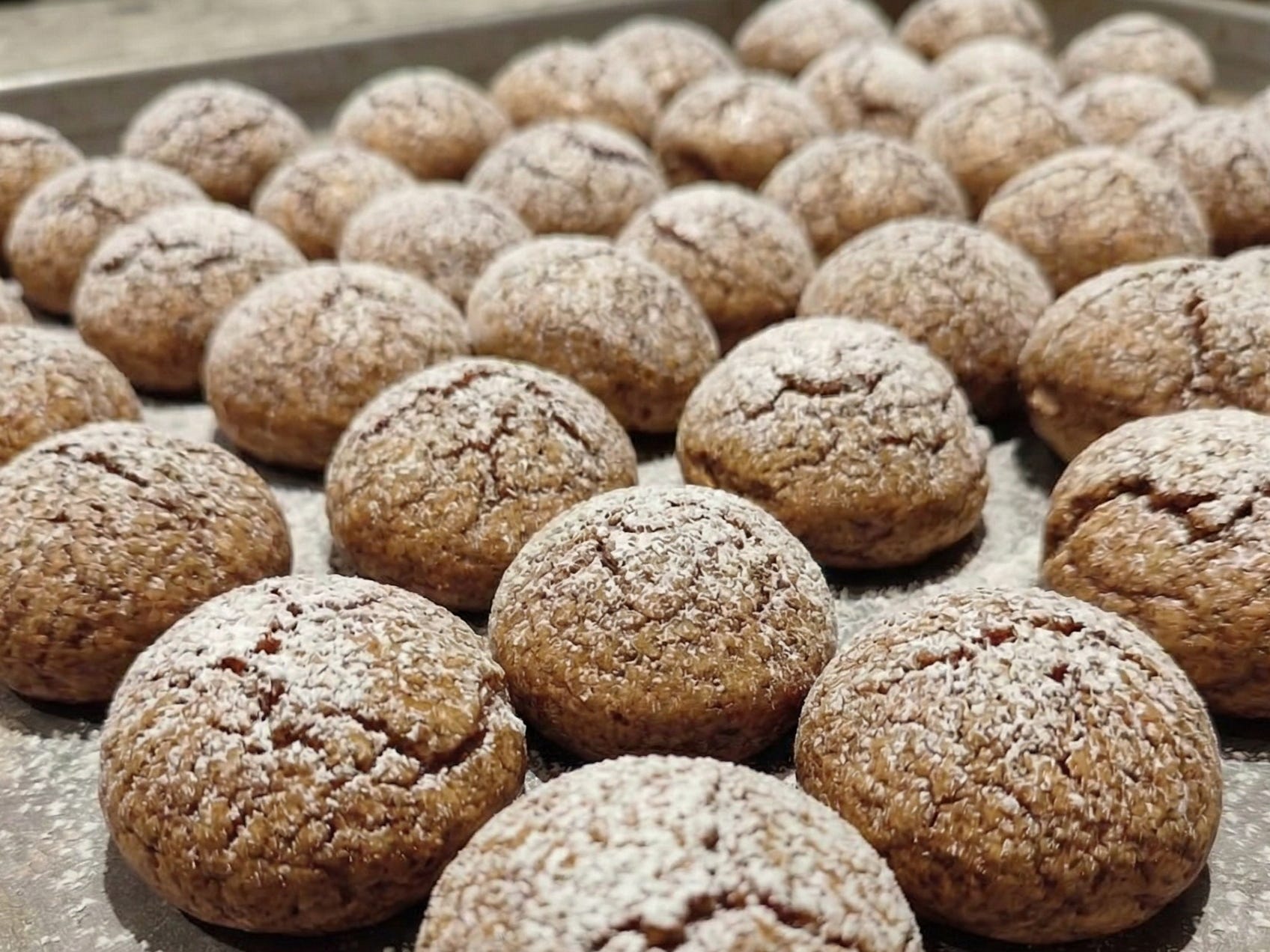
I remember standing in the school classrom.
The teacher was asking who could bake some cookies for the kids’ Christmas party.
Before she even finished the sentence... my hand was up.
“Yes, of course!”
I don’t know where that came from.
Not because I had checked whether I had time. Not because I actually wanted to spend my evening before the party measuring flour and butter after a full day of work. Not even because I’m particularly good at baking.
My hand went up because it always went up.
Because somewhere in my body, there was this quiet, automatic calculation running in the background: If I say yes, I am useful. If I am useful, I belong. If I belong, I am safe.
And on the other side of that calculation was the fear, automatic, instant.
If I don’t say yes… I am difficult. I am letting people down. I am not a good parent.
If I say no... I am not good enough. Not committed enough.
If I say no... I will be left behind. Passed over. Forgotten. Judged.
Nobody said these things out loud. Nobody had to.
I had been saying them to myself for years.
I didn’t know that then. I just thought I was being helpful. A good parent. I wanted to be good enough. I wanted to belong.
I drove home, kids in the back seat, already mentally reorganising the week, already tired.
And I thought: why did I do that again?
Not for the first time.
Not for the last time either…
Someone asks you something.
A new project. A favour. A parents’ committee. Cookies for the school Christmas party. Making costumes for the whole team for Halloween.
And before you even finish the thought, before you check your calendar, your energy, your gut, you hear yourself say it.
“Yes, of course.”
Sounds familiar?
I know this feeling well.
For years, my default answer was yes. To clients. To colleagues. To requests that arrived on a Friday afternoon. To things I was good at but didn’t actually want to do.
I said yes because I thought that’s what made me valuable.
I said yes because I was afraid that saying no would make me difficult, ungrateful, or less-than.
I said yes because somewhere along the way I had learned - deeply, quietly, without even noticing - that being helpful was how I earned my place. I had to do things, to feel I am acceptable. Valuable. Good enough. Not less than others.
And for a long time, it worked.
Until it didn’t.
However, what nobody talks about: slowly, “yes” costs you too much.
The small yeses, one by one. Stacked up. Week after week. Day after day.
Yes to the extra meeting. Yes to covering for a colleague. Yes to one more task, one more request, one more thing.
Until one day you look at your calendar and there is no white space. No room for thinking. No room for eating and sleeping. No room for breathing. No room for the unexpected - the sick child, the broken pipe, the moment you just need to stop.
And you are already behind before the week even starts. Every week. Every day.
This is how overwhelm begins. Not with a crisis.
With a habit.
It is what happens when you give and give and give, and forget to protect what is yours.
So why do we do it?
Why does yes come out so automatically?
For many of us, it comes from a very old belief: that our worth depends on our usefulness.
If I help, I am valued. If I say no, I am letting people down. If I disappoint, I might lose something - approval, belonging, love.
It’s not a rational thought. It doesn’t live in the thinking brain.
It lives much deeper than that. And it’s been always there for too long time.
Some of us learned it at home. Some in school. Some in the early years of our careers, when saying yes to everything felt like the only way to prove we deserved to be there.
And it worked back then.
The problem is, we never unlearned it.
Sounds familiar?
If so, how do you start? Saying no sounds difficult. Weird. Impossible.
Take a deep breath. And start gently.
Because changing a deeply wired habit is not about willpower. You cannot just decide to “become a no person” tomorrow. That’s not how it works.
But here is something small, completely doable, that changes everything:
You don’t have to answer immediately.
That’s it. That is the first step.
When someone makes a request, and your mouth is already forming the “yes”, just pause.
Take a breath.
And say one of these instead:
“Let me think about it, and I’ll let you know tomorrow.”
“I want to give this the energy it deserves. Can I get back to you by the end of the week?”
“I’m not sure right now, I have to check my schedule. Give me a few days, please.”
No drama. No apology. No excuses.
Just... a pause.
This pause does several things at once. It gives you time to check in with yourself: Do I actually want to do this? Do I have the capacity? Do I have energy? What would I say No to by saying Yes to this?
It also signals to others that your time and energy are not automatically available. That you are a person with limits, like any human being. And people respect this more than you think.
If you do not protect your own energy, nobody will do it for you.

Nobody will say no on your behalf. Nobody will look at your calendar and say “she already has too much.” Nobody is watching out for your pile getting too big.
Only you can do that.
Saying no is not selfish.
It is not unkind.
It is not a failure of character.
It is one of the most important things you can learn to do - for yourself, for the people you love, and paradoxically, for the very people you want to help.
Because a “yes” given from a place of exhaustion is not a gift.
It’s a debt.
And maybe the real question isn't "why do I say yes so often." Maybe it is: what am I afraid will happen if I don't?